

WordWhizzle Pop
Apprope AB
I spent time with WordWhizzle Pop as a casual word game, and my first impression was that it is built for quick rounds rather than long, story-driven sessions. That distinction matters. This is not a vocabulary course, a competitive spelling platform, or a traditional crossword replacement. It is a lightweight word-search experience from Apprope AB, aimed at people who enjoy spotting connections and solving compact puzzles whenever they have a spare moment.
The game is free to start and belongs to the word-puzzle side of mobile gaming. Its store summary promises a different kind of word-search challenge, and that is a fair way to frame the experience: the appeal comes from looking at a group of letters, testing possible relationships, and getting the small satisfaction of clearing a puzzle. I found it easiest to enjoy when I treated each round as a short mental break instead of expecting a large, elaborate game world.
It is also a broadly accessible release. The age rating is Everyone, the minimum operating system is Android 4.4, and the current version is 1.4.8. Those details make it a practical option for people using older Android hardware, although the actual comfort of play will still depend on screen size, touch responsiveness, and how well the device handles the interface.
How the free model affects the experience
The important cost detail is simple: the game can be downloaded and played for free. That makes it easy to try without committing money first, which suits this type of short-session puzzle particularly well. I would not recommend paying anything until you know whether the puzzle style fits you, because the basic question is not whether the game looks attractive in a store listing; it is whether its particular approach to word searching keeps you interested after the first few rounds.
There are in-app purchases ranging from $0.99 to $49.99 per item. That is a wide range, so I would approach the optional spending carefully. The free entry point is the strongest part of the value proposition, while the paid side should be judged by how much the player personally needs whatever those purchases provide. I would not treat an optional purchase as necessary simply because a difficult puzzle slows me down.
Related News






For a parent considering it for a child, the Everyone rating is reassuring as a basic content signal, but the purchase range still deserves attention. I would check the device’s purchase controls before handing over a phone or tablet. That is not a criticism of the puzzle design itself; it is simply sensible whenever a free game includes optional transactions.
The game has attracted an average rating of 4.6 from around fifteen thousand ratings, with roughly 3.9 thousand written reviews. It has also passed one hundred thousand installs. Those figures suggest that the format has found a real audience, but I would still treat them as a starting point rather than proof that every word-game player will enjoy it. Word puzzles are unusually personal: one player may find a challenge pleasantly absorbing, while another may find the same structure repetitive.
What I actually value during play
The main value is convenience. I can open it when I have only a few minutes, solve something, and leave without needing to remember a complicated plot or rebuild a large strategy. That makes it useful while waiting for an appointment, taking a short break from work, or winding down before sleep. The low commitment is part of the design’s strength.
Gallery
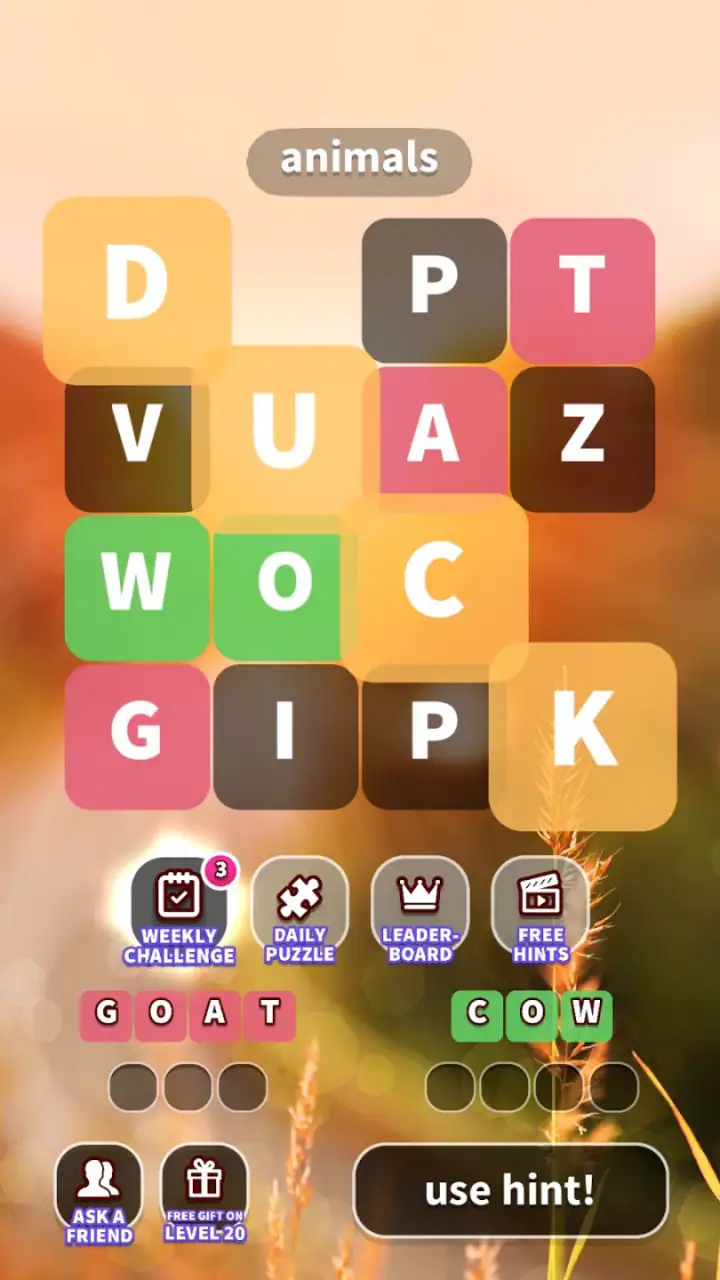
I also like the way a word-search game can shift between recognition and experimentation. Sometimes the answer feels obvious as soon as I scan the available letters. At other times, I have to stop looking at the whole puzzle and examine smaller groups, possible endings, or familiar word patterns. That change of mental approach gives the game more texture than simply tapping random letters until something works.
My most useful habit was to avoid locking onto the first possible word. When I saw a promising cluster, I checked whether another word could use the same area or whether the surrounding letters suggested a broader theme. This made the puzzles feel less like a speed test and more like a visual sorting exercise. It is a small adjustment, but it helped me make progress without immediately reaching for assistance.
Another practical tip is to play with a deliberate stopping point. Because the rounds are easy to start, it is tempting to continue through several puzzles without noticing how long you have been playing. I found the app worked best in short sets. Solving a few puzzles, putting the phone down, and returning later kept the activity fresh and made difficult sections less frustrating.
That workflow also reveals an important trade-off. The same simplicity that makes the game convenient can limit its emotional range. There is no need to learn a deep system before starting, but there may also be less to master beyond improving observation and vocabulary. Players who want character development, elaborate progression, or a strong competitive layer will probably find the experience too narrow.
Where it fits among other word games
Compared with a standard crossword, this is a more immediate experience. A crossword usually asks me to work through clues, recall facts, and manage a grid over a longer period. WordWhizzle Pop is better suited to players who want visual word discovery without committing to a full puzzle page. If I want clue-based reasoning or a more traditional newspaper-style challenge, a crossword app would be the better choice.
Compared with a basic word-search book or a static puzzle app, the mobile format is more convenient because the device is always available and the challenge can be picked up quickly. The disadvantage is that a screen-based game can feel less relaxing than paper, especially for someone who already spends most of the day looking at a phone. I would choose this app for portability, not for a screen-free break.
It also differs from spelling games that focus on building the longest word or competing against a clock. The attraction here is not necessarily showing off advanced vocabulary. It is the process of finding the intended relationships in the puzzle. That makes it approachable for casual players, though people who want a demanding spelling workout may prefer a game built around definitions, word construction, or head-to-head competition.
For language learners, I would describe it as a supplementary activity rather than a main study tool. Searching for words can reinforce recognition and expose a player to familiar patterns, but it should not replace structured lessons, pronunciation practice, or a dictionary. The game is most useful when the player already knows enough English to enjoy the puzzle rather than constantly needing to translate every possibility.
Small decisions that make difficult puzzles easier
When I got stuck, the least helpful approach was repeatedly scanning the entire screen at the same speed. A better method was to divide the puzzle into sections, inspect unusual letter combinations, and then return to the full layout. This reduced visual noise. I also found it useful to look for common beginnings and endings instead of searching only for complete words from left to right.
A second useful approach is to separate “I do not see it” from “I do not know it.” Those are different problems. If the letters look familiar but the arrangement is hard to notice, changing the direction of my scan usually helped. If the word itself was unfamiliar, spending too long on it was less productive. That distinction keeps a single stubborn puzzle from turning a relaxing session into a vocabulary test.
I would also avoid using any available help immediately. Even when a puzzle feels blocked, taking a short pause often works better than spending a resource or making a purchase out of impatience. The free nature of the game makes experimentation low-risk, so I prefer to give myself another attempt before considering optional assistance. This is especially important for players who want the satisfaction of solving rather than simply completing every screen.
On a smaller phone, careful tapping matters. Word-search interfaces can become less comfortable when letters are tightly arranged, and a mistap can interrupt the flow even when the answer is clear. I found that using a steady pace was more reliable than rushing. Anyone with larger fingers, weaker eyesight, or an older display should try a few rounds before deciding whether the controls feel comfortable enough for regular use.
What may limit its long-term appeal
The biggest limitation is repetition risk. A focused word-search format can be satisfying, but it does not offer the variety of a larger collection containing crosswords, anagrams, definitions, and daily competitive modes. If I play only this style every day, its visual rhythm may start to feel familiar. That does not make it poor value for occasional use, but it does affect whether I would choose it as my only word game.
The free model can also influence how I judge progression. Since optional purchases sit alongside free access, I would be cautious about spending simply to remove a temporary obstacle or extend a session. The sensible value calculation is personal: if the free experience already gives enough enjoyable puzzles for your habits, there is no reason to buy anything. If you dislike the core format, a purchase will not solve that underlying mismatch.
Another limitation is that the game may not satisfy players who need a clear educational purpose. I can enjoy the mental exercise, but I would not describe it as a structured course or a reliable way to measure vocabulary growth. Someone preparing for an exam, studying a new language seriously, or seeking detailed explanations would be better served by a dedicated learning app.
I would also skip it if my priority is social play. The strongest reason to open this game is personal concentration, not conversation or teamwork. Players looking for live opponents, shared boards, or a community around their results should compare it with multiplayer word titles instead. Here, the quiet, self-contained format is both the appeal and the boundary.
Who is most likely to enjoy it
I think it is a good fit for casual puzzle fans who enjoy finding words but do not want the commitment of a long crossword. It also suits people who like keeping a small game available for waiting rooms, commutes, and short breaks. Because it is free to begin and rated Everyone, it is easy to test with different members of a household, provided purchase controls are handled responsibly.
It may be particularly comfortable for players who enjoy visual scanning. Some word games reward rapid typing or broad trivia knowledge; this one is more appealing if you like noticing patterns, comparing nearby letters, and gradually narrowing down possibilities. I found that the satisfaction came from seeing an answer emerge from the layout, not from building a complicated strategy.
It is less suitable for someone who wants a single definitive daily challenge, a story campaign, or a serious competitive ranking system. It is also not my first recommendation for a player who finds repeated word-search mechanics dull. In that case, a crossword, anagram game, or definition-based quiz would offer more variety and a different kind of mental effort.
Before installing, I would ask myself three practical questions. Do I enjoy word searches more than clues? Am I comfortable with a free game that includes optional purchases? And do I want short, self-contained sessions rather than a large progression system? If the answers are yes, the low barrier to trying it makes the decision easy. If not, another category of word game will probably provide better value even if it costs money upfront.
My verdict after weighing the value
WordWhizzle Pop earns its place as an easygoing word game because it delivers a clear activity without demanding much preparation. I like it for brief sessions, quiet concentration, and the small reward of spotting a word that was hidden in plain sight. The free starting point is important: it lets me judge the puzzle style directly instead of asking me to trust a description or pay before understanding the experience.
My recommendation comes with boundaries. I would keep it installed as a casual option, not treat it as a complete word-learning tool or a replacement for every other puzzle format. I would also avoid optional spending until the free play has proved genuinely useful in my routine. The purchase range means that careful budgeting is part of getting good value, especially for families or anyone who tends to buy hints when stuck.
In the end, this is a buy-or-skip decision with a straightforward answer: try it if you want accessible word-search challenges and short mobile sessions; skip it if you need deep progression, social competition, or detailed language instruction. With an average rating of 4.6 and more than one hundred thousand installs, it has clearly appealed to many players, but its best audience is still specific. For me, it works as a simple mental reset—provided I keep the sessions occasional and let the free experience decide whether any purchase is worthwhile.
FAQs for WordWhizzle Pop
What is WordWhizzle Pop, and how does the game work?
WordWhizzle Pop is a casual word puzzle game built around finding related words from a given category or theme. After launching a round, you examine the available letters and connect or select the words that fit the clue. The puzzles are designed to be quick and accessible, making the game suitable for short sessions while still becoming more challenging as you progress through its levels.
Is WordWhizzle Pop free to download and play?
WordWhizzle Pop can generally be downloaded and played without an upfront purchase, allowing you to try the core puzzle experience at no cost. However, free games of this type may include advertising, optional purchases, or other in-app monetization features. Before downloading, check the current Google Play or App Store listing for pricing details, supported purchases, and any platform-specific restrictions.
Does WordWhizzle Pop require an internet connection?
The basic puzzles in WordWhizzle Pop may be playable without a constant internet connection, which is convenient when traveling or when you want a quick offline game. Nevertheless, the app may need access to the internet to display advertisements, synchronize progress, download updates, or process optional purchases. Offline availability can also vary between versions and devices, so test it before relying on it without connectivity.
Is WordWhizzle Pop suitable for children and family play?
WordWhizzle Pop is generally easy to understand and can be enjoyable for children, teenagers, and adults who like vocabulary games. Its educational value comes from encouraging spelling, word recognition, and category-based thinking. Parents should still review the age rating, advertising content, privacy information, and in-app purchase settings before allowing younger children to play, since these details can change with updates.
What should I do if WordWhizzle Pop does not save progress or stops working?
If WordWhizzle Pop crashes, freezes, or fails to record your progress, first close and reopen the game, then check that your device has enough free storage and is running a supported operating-system version. Installing the latest update can also resolve compatibility problems. Avoid clearing app data unless your progress is synchronized, and contact the developer through the official store listing if the issue continues.
Pros
- Quick word puzzles are ideal for short breaks.
- Colorful visuals make the game feel lively and approachable.
- Simple controls are easy for players of most ages.
- New challenges help prevent the gameplay from feeling repetitive.
- The game can improve vocabulary and spelling awareness.
Cons
- Some puzzles may feel too easy for experienced word-game fans.
- Hints can make later challenges feel less rewarding.
- Progress may depend heavily on recognizing common word patterns.
- The small play area can feel cramped on some phone screens.
- Frequent players may eventually notice a repetitive gameplay loop.


